Contact Us

We are a plastic company that specialises in creating plastic products that are ultra clean. We don't just do medical products, give us a call or use the form on the right to contact us. see how we can help your business. 

Medical Moulded Products Ltd
Newborough Rd
Lancaster Court,
Lancaster Park
Burton-on-Trent
DE13 9PD

T: 01283 575 888
E: admin@medical-mouldedproducts.co.uk

Unit 5 Lancaster Court, Lancaster, Newborough Road
Burton-on-Trent-Staffordshire, DE13 9PD

01283 575 888

Medical Moulded Products: Based in Burton-on-Trent. ISO Cleanroom Stardard, Injection Moulding Products for Medical, Hospital, Dental and Vetinary Use, Medical Device Overmoulding.

News

Our New Fanuc i50

Robert Lucas

We are proud to introduce our new Fanuc i50, our first fully-electric injection moulding machine, consuming 40% less electricity when compared to any similar sized hydraulic injection moulding machine.

Thus, it is not only more cost-effective, but also more sustainable for both the business and the environment, delivering high performance with minimal power consumption.

The i50 yields greater accuracy when producing parts, which is commonly found in all-electric machines, and is partly due to the specially designed premium injection unit.

The lack of hydraulic oil on this machine eliminates any risk of oil contamination on product, which is essential for cleanroom manufacture.

This is just the beginning of our investment programme to become 100% electric within 5 years, proving our dedication and commitment in becoming an environmentally responsible company.

See below for visual representation.

Video displaying the new machine being used in practice.

Improvement Philosophy

Robert Lucas

What is improvement?

The term ‘improvement’ is something every individual seeks, as well as businesses. Everyone wants to improve. We will always want this because improvement is never-ending. We can always be better, we can always improve. That is why here at MMP, we stand by this underlying philosophy.

Improvement cannot occur without learning, and learning cannot occur when one is perfect. This is why we strive towards perfection, while acknowledging we will never reach that point. Perfection is an impossible milestone, a myth in which we idolise, however, it is a motivating and ambitious goal.

Therefore, by aiming for perfection, we are able to measure our improvement when reflecting on the journey. We get to see how far we have come, despite the fact we did not accomplish the target of ‘perfection’, we will be far far closer. This stands for every person and every business.

Since our last post, we have continued our growth, taking on more work and expanding our expertise. Without the quintessential goal of perfection, it would have been increasingly difficult to improve. By this, knowing that we are never perfect allows us to reflect on what we could be doing better. There is always something!

So, to answer the overlying question, improvement is subjective. We must not compare ourselves to others, only to our past selves. That way, we are able to measure improvement both as a business and as people. Our journey so far this year has been nothing short of incredible, as we have taken this time to grow, improve, and overcome. We hope this philosophy helps others grow as much as it has helped us.

Thank you,

MMP

New Changing Areas

Robert Lucas

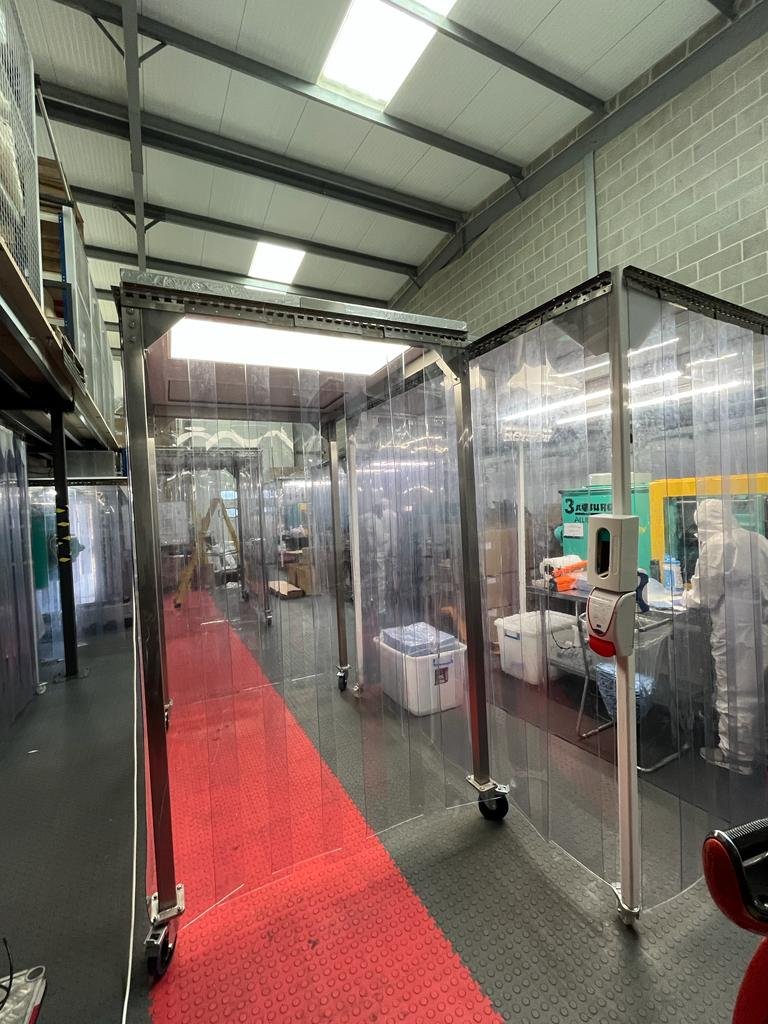
Our new changing areas are now fully operational and can be seen in the image below. The new changing areas mean that our staff can move in and out of the cleanrooms while further reducing any risk of contamination. Thus, we are very proud of this addition to our business.

New Pad Printer - Functioning in the clean-room

Robert Lucas

As previously discussed, our new pad printer at MMP will enable us to safely and effectively print within the clean-room environment at a faster rate and greater quality.

The following content displays the use of our new pad printer by one of our staff who is printing on syringes, further preparing them for despatch.

Contact and Settle plates

Robert Lucas

Contact plates are devices for environmental monitoring of surfaces and personnel for microbial contamination. In the first image, we are using a contact plate by making direct contact with the surface. After that, the contact plate is sealed and sent away for environmental testing to investigate for any human contamination within our cleanrooms. By using these contact plates, we are ensuring a safe and clean environment within our facilities.

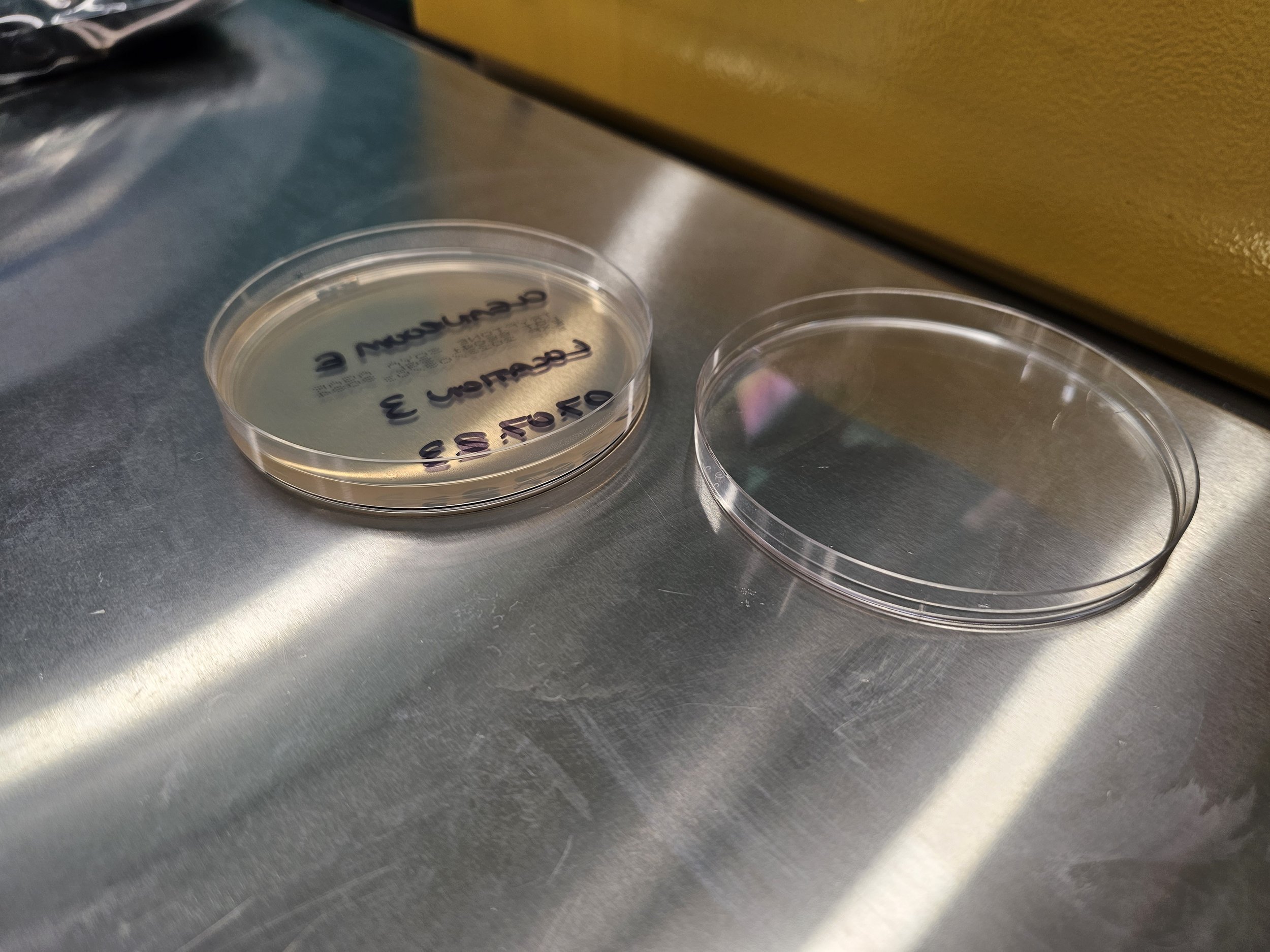
Settle plates on the other hand are Petri dishes containing a source of nutrients to support the growth of micro-organisms and is left exposed to the air for a certain amount of time and is then incubated to allow visible colonies to develop and be counted. The second image shows us using the settle plate where we left it on the bench for 1 hour. After that, it is sent for testing airborne contamination.

The third image shows both plates ready for despatch. Here at MMP, we repeat this testing process monthly in four of our critical locations in our active cleanrooms, to validate our cleaning procedures. Therefore, these devices are vital to MMP as they give us insight into the cleanliness of our work environment, allowing us to make positive changes where necessary.

Cleaning our Facilities

Peter Lucas

Another week ends and a full clean of the factory and machines is carried out. MMP take pride in the high standards of cleanliness within the factory and focus on maintaining these standards consistently.

Thorough cleaning every Friday afternoon ensures that any human or other contamination is removed before starting work again on the Monday morning.

Image displaying the cleaning of our machines.

New Pad Printer

Peter Lucas

We have recently introduced a new pad printer into our operations at MMP. This pad printer will greatly increase our capacity to print, meanwhile allowing safe printing within the cleanrooms, mitigating any potential risks of contamination.

The pad printer will automatically clean the pad between prints, ensuring sharper prints every time it is used.

Therefore, this new printer is a great addition to our businesses and can be seen in the following image.

Robot - Meet Adam

Peter Lucas

MMP are proud to announce that our new 6-axis robot is now working in production. The following video shows Adam in production during the working process.

Adam will extract the plastic product from the ARBURG machine, restart the moulding process while removing the feed system from the parts. It will then deposit each product into a separate box and dispose of the feed system. Finally, Adam will repeat the process.

Robot - Installation

Peter Lucas

Despite the delayed arrival of our new 6-axis robot, it is currently being installed which is presented in the underlying images. To understand more about the upcoming addition to our company, please review the updates in the remainder of our news posts.

Shadowgraph Measuring

Robert Lucas

A shadowgraph is an optical method that reveals non-uniformities in transparent media. A shadowgraph is a type of flow visualisation.

Generally, a difference in temperature, gas, or a shock wave in the transparent air cannot be seen by the human eye or cameras. However, all these disturbances refract light rays, allowing them to cast shadows. Thus, the shadowgraph technology is able measure our products using the shadow casts on at least a 10x greater scale, significantly reducing the degree of inaccuracy.

The image below shows the shadowgraph in use, measuring complex and small shapes.

Robot - Updates

Robert Lucas

We are excited to announce the delivery of our new robot this Thursday, 11th May. The images below show the final assembly prior to the delivery. As previously discussed, the six-axis robot will undoubtedly improve the efficiency of our business and free up capacity for new customers.

Meet our new Robot

Peter Lucas

In conjunction with the new cleanrooms, we are proud to announce the addition of our first 6-axis robot being prepared by ‘Geiger Handling’ which will allow the automation of the moulding process. This automation will remove the worker from the clean room area, significantly reducing the risk of contamination which is furthered by our new replacement cleanrooms.

This robot will allow us to manufacture products up to triple the normal speed while maintaining the high quality that we proudly provide. The increased speed in production allows us to take on more customers with the same facilities and workforce, consequently improving our efficiency in MMP.

This is the robot being prepared for automation (See the video below)

According to ‘productionmachining.com’ it is realistic to see up to a 30% increase in production by using automation in the manufacturing process. For us, it would increase production levels by around 300%, emphasising the benefits of this robot for MMP. Furthermore, workers at MMP will not be replaced by the robot but will be working in cooperation to provide a high-quality and time-efficient service to our customers. Almost 56% of global companies do some type of automation, making them stronger, faster and more competitive. Therefore, we are happy to announce our move towards automation, making the future possibilities limitless.

Cleanrooms - Encouraging cleanliness in our facilities

Peter Lucas

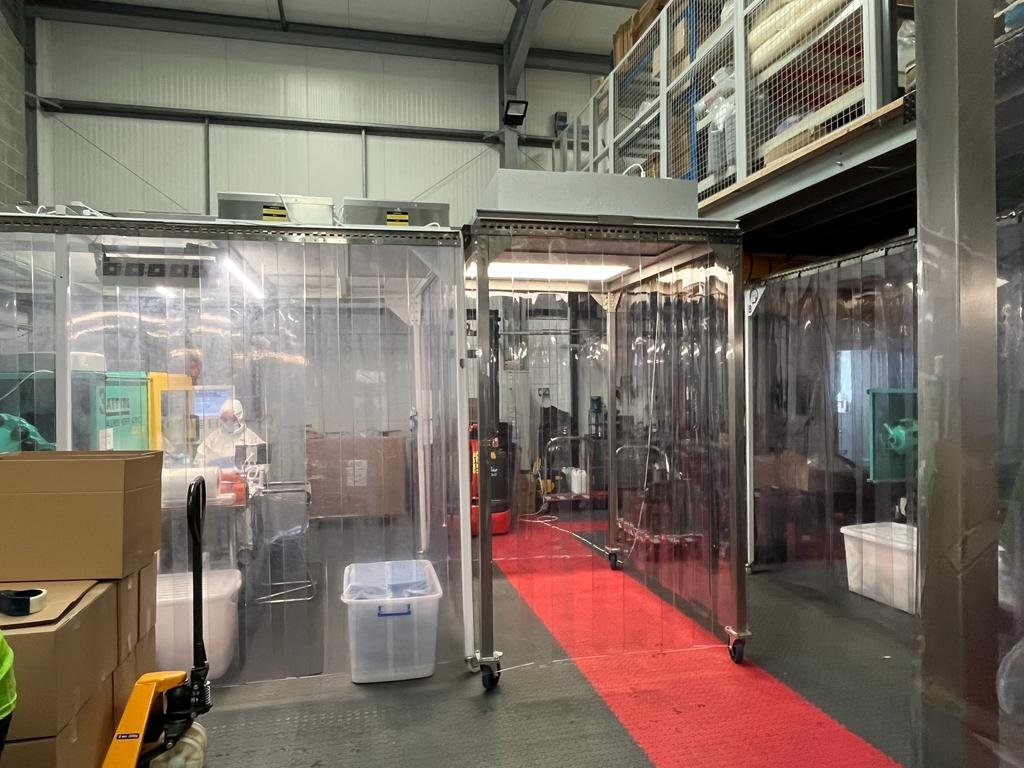
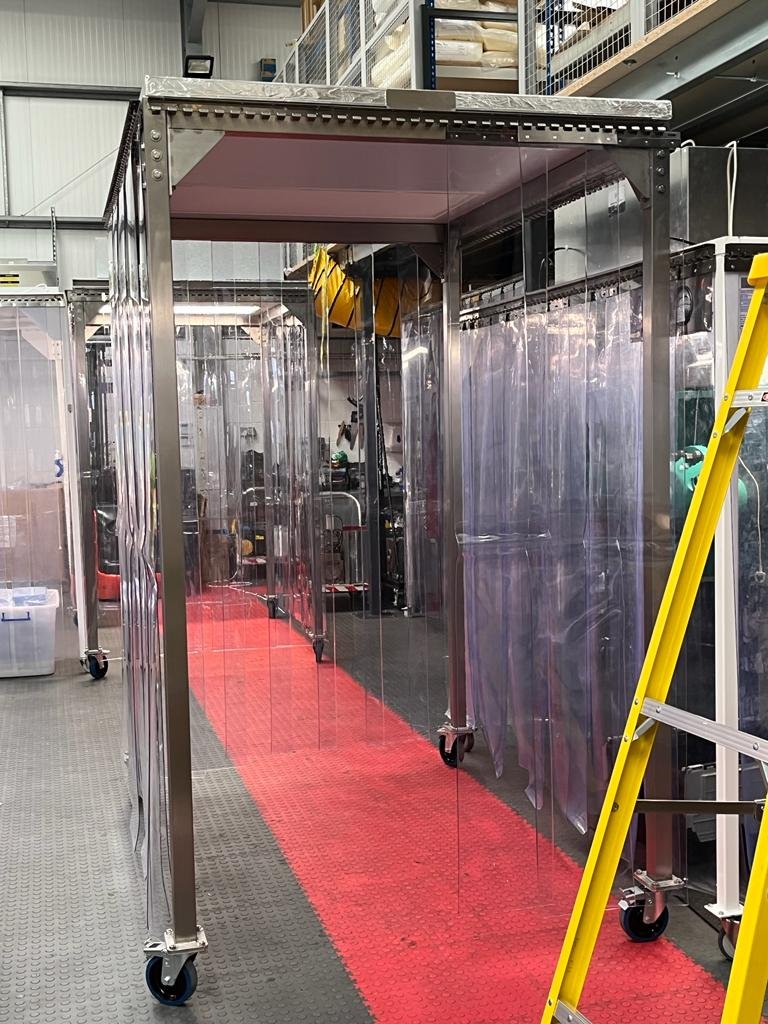
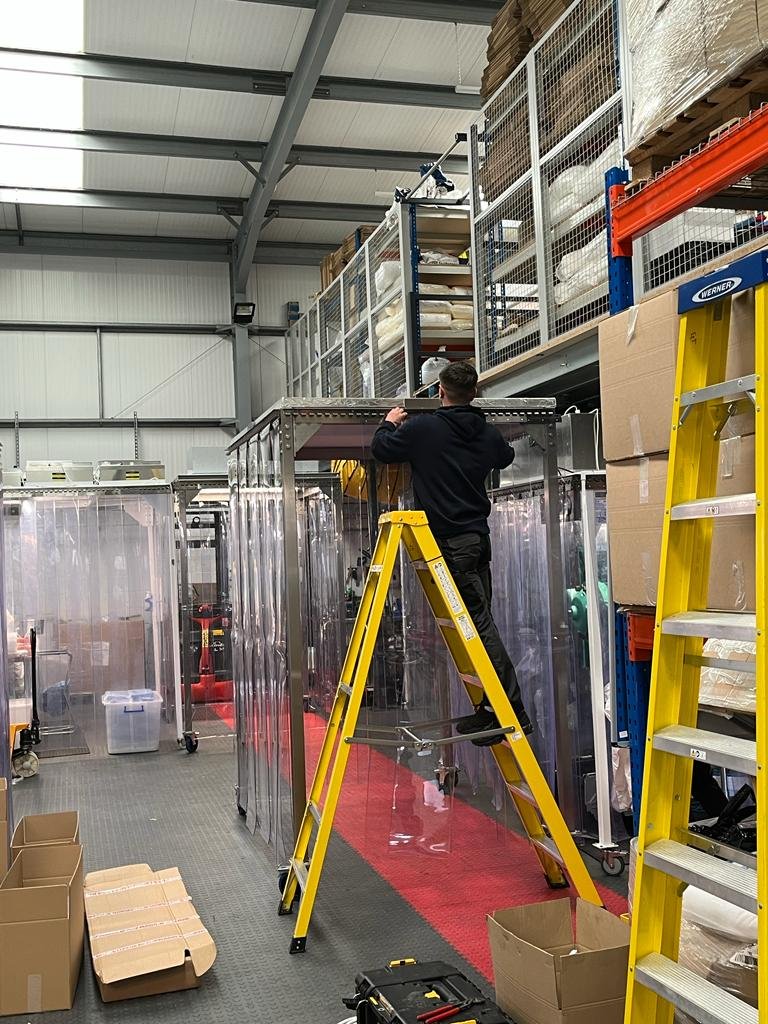
We are delighted to announce the addition of our new replacement entrance and exit cleanrooms, being more effective than the ones they are replacing. The cleanrooms will not only improve the overall cleanliness of the facility but will also significantly reduce the risk of contamination in our products. Cleanrooms can reduce particular matter such as dust particles to one-thousandth of what is found in normal room air, thus reducing the risk of contamination during manufacturing significantly. Images of these cleanrooms being built can be seen below.

A common concern among customers in this sector is the quality of the manufacturer’s facilities in relation to cleanliness. Through this new addition, we can clearly outline our commitment to cleanliness and ensure our customers that they are in safe hands with MMP. Cleanrooms play a crucial role in maintaining high levels of cleanliness in a wide range of industries and are irrefutably important in keeping a high quality in our products.

Cleanrooms - past, present and future

Guest User

Medical Moulded Products, in seven years, has designed many products for the medical sector. Peter Lucas, co-director, explains the history of cleanrooms and shares his predictions for the future of the cleanroom market.
November of this year will see the tenth anniversary of the death of inventor Willis Whitfield, a name not widely-known amongst the general public. But he was a man whose vision helped revolutionise many industries – and who pioneered a global technology market now valued at more than £4 billion.

Whitfield, the Oklahoma-born son of a cotton farmer, is credited with conceiving the idea of the modern day cleanroom – a ceiling-to-floor forced-air system that was patented in 1964. Before that, cleanrooms often had problems with particles and unpredictable airflows, but Whitfield came up with a solution by designing his cleanrooms with a constant, highly filtered air flow to flush out impurities in the air.

Today, the cleanroom – used in a variety of sectors including the production of medical devices, semiconductors, food products and electronics – is crucial to any industry requiring a controlled environment, ensuring the elimination of any contamination.

At the forefront of cleanroom technology in the UK, is Staffordshire-based Medical Moulded Products which, in just seven years, has developed a market in the manufacture of plastic products, including the injection moulding of spatulas, mixing bowls, syringes and dispensers, designed for the medical sector.

The company, which continues to invest in new technology and machinery, including intelligent robots, currently has five separate cleanrooms for the manufacture of medical-grade products for the dental and medical sectors.

“From our earliest days our goal has always been to ensure that we manufacture, test and meet the relevant regulatory and safety requirements for every product we produce, said MMP co-director, Peter Lucas.

Medical device cleanrooms are very effective at preventing medical product contamination, providing significant time, energy and cost savings – and no-one understands the need for a controlled manufacturing environment better than a medical device manufacturer.

“Our cleanrooms are fully compliant with ISO standards, are tested regularly and operate 24 hours a day, 365 days a year in order to maintain the cleanest possible environment,” said Lucas. “And because we have a very special relationship with all our customers we are able to work together to ensure we create the products that meet the exact specification that is needed – at the right price.

“We are very conscious of the fact that when it comes to developing a strong and profitable business in a highly specialised marketplace, then nurturing long-term partnerships with customers and suppliers is an approach that cannot be overlooked,” he added.

So what of the future for Willis Whitfield’s global cleanroom technology market – a sector which currently is worth more than £4 billion? Manufacturers can be assured there will be fresh challenges along the way, especially as new developments and more complex products, including the miniaturisation of devices, come along. One of the biggest will be to meet cost targets while still achieving the required standards in medical device cleanrooms.

“Our world is constantly changing, adapting and evolving – and there is no doubt that with ongoing innovation and advanced technologies there is huge potential,” said Lucas. “Cloud-based services, artificial intelligence and 3D printing are paving the way for digital innovation in medical device industries and helping to solve future challenges.

“Such advancements will enhance operation efficiency and productivity as we continually look to improve our service to customers,” he added.


MMP spearheads new plastic recycling initiative

Guest User

MMP is pledging its commitment to the environment and helping other UK organisations become more sustainable with their plastic waste. 

Medical Moulded Products (MMP), based on Lancaster Business Court, has launched a free platform and initiative which allows manufacturers to see what plastic products are available to drive forward the re-use of excess plastics in the injection moulding and manufacturing sectors.

The newly launched Facebook page enables moulding companies and manufacturers to see and post what free plastic products are available free of charge for re-processing. 

Currently, when MMP manufactures vital medical equipment there is a certain amount of plastic which can’t be re-used. Instead of it going to waste, this new platform will enable it to have a new life and be re-used in another shape or form.

MMP co-director Pete Lucas said: “We believe there is this opportunity to provide a platform for smaller companies to connect and promote the re-using of left over plastic materials that are still useful for injection moulding and manufacturing. 

MMP celebrates working milestone with pharma customer

Guest User

When it comes to developing a strong and profitable business in a highly specialised niche, nurturing long-term partnerships with customers and suppliers is one piece of the jigsaw that so often gets overlooked, comments Peter Lucas, co-director of Medical Moulded Products (MMP). 

And in a world that is constantly changing, adapting and evolving – and with a big emphasis on technology, human interaction still counts for a lot he adds. 

This statement comes following the recent announcement of a successful five-year business partnership with Manchester-based customer Alchemy Pharmaceuticals and the recent manufacture of 17,000 medical devices which help to administer medication into human brains.  

Peter says: “Our partnership all began with a Beta product we manufactured in our clean rooms for Alchemy, which we delivered on time and within budget.  

“With our collaborative approach to developing only the very best products for our customers, we knew our skillset was somewhat niche and only hoped that we could secure this first opportunity. Five years later our partnership is still going strong and we’re breaking new boundaries in the world of bespoke medical manufacturing.   

Ian Harrison, co-owner of Alchemy Pharmaceuticals said: “From the moment MMP delivered our first product we knew we would be in the very best hands. We particularly liked the fact that the clean rooms were on site at head office and that the directors of the business are actively involved at every stage. 

“The investment was extremely competitive and we had undertaken our research only to discover that Pete and Gerry had established a business that is completely focused on the niche of medical injection moulding.” 

Peter added, “From the outset, our goal is always to ensure we manufacture, test and meet the relevant regulatory and safety requirements for every product we produce and look forward to many more years working alongside the team at Alchemy.”

Playing a pivotal in Cellular Highways’ new consumable for cell sorting

Guest User

We have recently been appointed by Cellular Highways, a spin-out of TTP plc, based in Cambridge to assist in the production of moulded components for their fully enclosed cartridge for cell sorting. So far 1500 units have been delivered and significantly more are expected as production is ramped up. 

Our selection was based on our expertise in producing injection moulded disposables, at speed, to assist with this Beta product. 

Cellular Highways required a thin polycarbonate screw cap with a thermoplastic rubber insert for the output vessel of a new cartridge which will come to market later this year. The single-use closed cartridge, known as Highway1, will enable the analysis of millions of single cells for research and development.  

John He, mechanical engineer at Cellular Highways, said: “Since the cartridge had to be single-use and closed, there could be no clogged nozzles, no cleaning, and no carry-over or contamination. In addition, the vessel had to be large enough to process typical cell populations in a single run without the need to use multiple cartridges. 

“From an initial conversation with the team at MMP, we then submitted manufacturing drawings and a CAD model. Very quickly we were given a comprehensive quote which was extremely competitive and with the timings in line with our requirements.” 

Peter Lucas, co-director of MMP said: “Within four months, we had successfully designed and delivered the micro-thin tube cap based on the manufacturing requirements. 

“From the outset, our goal was to ensure that our cap was manufactured and tested to meet the relevant regulatory and safety requirements before sending on to Cellular Highways.  

“We were pleased to have had such positive feedback and to be known as the people to do business with based on speed, flexibility and ease of working practices. We’re looking forward to working with Cellular Highways again in the future.” 

Helping during the Ukraine crisis

Guest User

This month, we were pleased to play our part in the Ukraine war by dropping off essential goods for export.

All of the MMP team kindly collected and donated clothing, bedding and medical items which were then handed over to the charity Teams4U who had a collection base in Burton, just on our doorstep.

At the collection base, more than 20 volunteers were seen packing, sorting and selecting the donated goods from different companies across the region.

They will then head to either Suceava, Romania - approximately 20 minutes from the Southern border with Ukraine, or across the border and to those in conflict zones.

Peter Lucas, co-director of MMP said: "We know that our donation was a drop in the ocean of what's needed, but we wanted to help and will continue collecting for as long as is possible."

Clive Lawton from Teams4U commented: "Without these small and consistent donations from MMP we wouldn't have amassed the amount of goods we now have and soon they will be leaving UK shores and into the hands of refugees. No donation is too small and we always welcome more. Thank you MMP."

Medical Moulded Products welcomes MP as it introduces new machinery

Guest User

Medical Moulded Products (MMP) in Burton has, this week, welcomed Kate Griffiths MP through the doors of its clean room factory facility to mark a new company manufacturing milestone. 

The multi-million-pound facility, located on Lancaster Business Park, has recently introduced a brand-new machine to add to its four-strong line up and which will help in the manufacture of medical-standard plastic products for use in the dental and pharmaceutical industries. 

The company has seen the demand for production of its plastic products increase significantly during the pandemic with no let-up in sight. 

Company co-director Gerry Borg comments: “During the global pandemic months, we received orders to manufacture many items, including 15,000 medical slides to help detect cancer cells and also a video laryngoscope to enable doctors to see down the throat of patients using smartphone technology. 

“Day to day, we are producing injection moulded spatulas, mixing bowls, syringes, dispensers and bespoke products from concept to completion.” 

To make the machinery more relatable, company directors have also decided to give each of the five machines a name after world-famous scientists, the latest of which has been called Babington, after English physician Benjamin Guy Babington who invented several medical instruments (including the first laryngoscope). 

Speaking of the visit, Kate said: “This is a remarkable organisation in Burton producing remarkable products that are invaluable for the medical industry and I am honoured to have been able to attend today and unveil Babington. 

“I wish the company great success for the future and look forward to seeing and hearing about its product advances as we move through 2022 .”

MMP Directors plunge into freezing temperatures for charity

Guest User

Two cold water-hardy directors from Medical Moulded Products (MMP) in Burton-Upon-Trent are making a splash for charity, this week.

Pete Lucas and Gerry Borg are, this Friday (17 December), stepping into their wet suits and plunging into eight degree waters at Dosthill Quarry in Tamworth, all in aid of the River and Canal Trust. 

The duo wanted to do something memorable to end the year and at the same time raise vital funds, all whilst doing something that would test them physically and mentally.

They will be spending an hour in the water, ploughing up and down and around the perimeter with just a distant light to guide them around to the nearest buoys. 

Peter Lucas, co-director of MMP, said: “I’m quite adept at swimming in freezing temperatures but to do it in almost darkness will be an all new test for me, and that’s exactly why we’ve chosen to do it.”

Gerry Gould, co-director of MMP, said: “The Canal & River Trust look after and bring to life 2,000 miles of waterways which are important for our natural habitats and our own mental health. Although I can’t say I’m hugely looking forward to it, it will be for a great cause.”

To donate, please visit https://bit.ly/3EXgkd4